
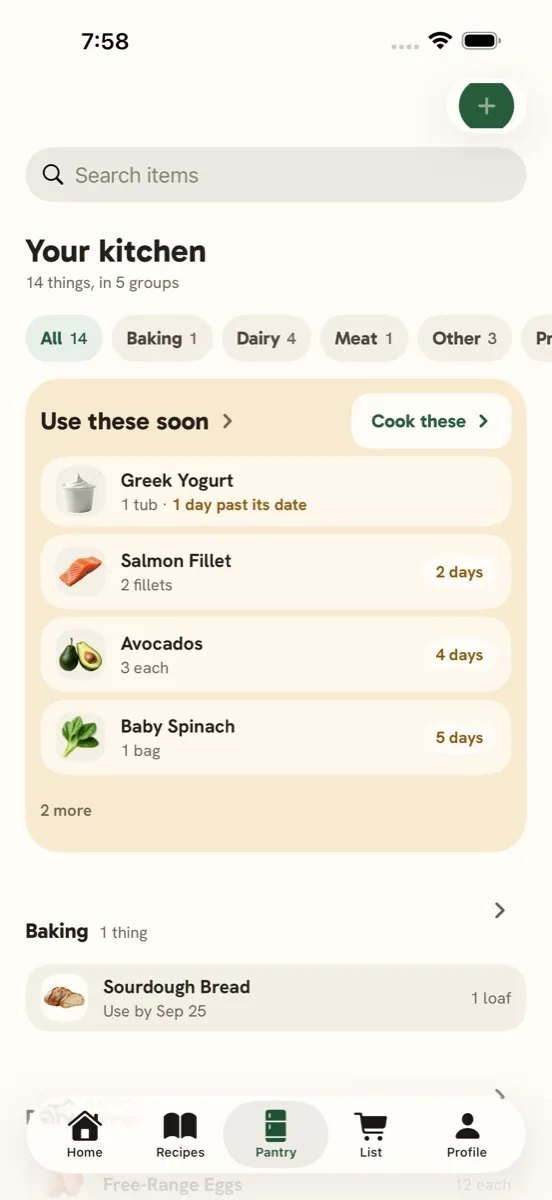
Where should a pantry inventory start?
Start a pantry inventory with one shelf, drawer or cupboard you use often. Leave the other shelves for later. For example, start with the shelf holding pasta, rice and canned beans rather than counting every spice jar in the kitchen.
What amount should you write down?
Write pantry amounts in the words you use when cooking: two cans, one bag, half a jar. Note the package size when the size changes your plan. Two small cans and two large cans are not the same dinner. Refine the pantry list with use.
- Item: black beans. Amount: 2 × 15 oz cans. Location: middle shelf.
- Item: rice. Amount: about half a bag. Location: tall cupboard.
- Item: pasta. Amount: 1 unopened box. Location: middle shelf.
How do you keep the pantry list apart from the shopping list?
Keep the shopping list apart from the pantry inventory, in a second column or on a separate sheet. Do not move an ingredient to the shopping list just because a recipe mentions that ingredient. Check the amount you own first. A household member should be able to tell which list means “buy this.”
When should you update a pantry inventory?
Update the pantry inventory at one fixed moment: putting groceries away, finishing dinner, or writing the weekly shopping list. Cross off empty packages and change amounts then. If updating every meal is too much, do a shelf check before the next shop instead.
When is it time to add the next zone?
Add a second shelf to the pantry inventory once the first shelf has helped with a meal or a shopping decision. Keep location names consistent so “top cupboard” means the same thing to everyone. The free PantryPrix pantry inventory template prints with room for amounts, locations and your own notes.
What about the fridge and freezer?
Add the fridge and the freezer to a pantry inventory as two separate zones, after the list for the dry shelves is working. Fridge contents change every day, so a full list is hard to keep current. Start with the items that decide dinner: proteins, opened sauces and the produce you plan to cook this week. For the freezer, write what each item is and roughly when the item went in, for example “chicken thighs, 2 packs, frozen early March.” A label on the bag and a line on the list save guessing later.
What if other people in the house cook too?
A household where several people cook needs one shared pantry list, kept in one place: a note on the fridge, a shared document or a shared pantry in an app. Agree on one rule for finishing an item: whoever opens the last package crosses the item off the pantry list or adds the item to the shopping list. Use the location names everyone already uses. If the list drifts out of date, skip the blame and check the shelves before the next shop. Ten minutes usually brings the pantry list back up to date.
What can you leave off the list?
Not every item in the kitchen needs a line on the pantry list. Salt, pepper and the oil you always replace before the bottle runs out rarely change a plan, so one note such as “basic spices” is enough. The goal is a list that answers “can I make this tonight?”, without recording every item in the kitchen. Delete any line that has not helped a meal or a shopping decision in a month.
How long does the first shelf take?
The first shelf of a pantry inventory takes less time than you expect, as long as you stop at one shelf. Write each item down as you pick up the package, and put the package back in the same spot so the location on the list stays true. Do not reorganize while you count: tidying and counting at once is how a quick job turns into an afternoon. Set aside anything you do not recognize or will not use, and decide after the list is done.
Should you write expiration dates on the list?
Put expiration dates on the pantry list only for the items where the date changes what you cook. Opened jars, dairy, fresh produce and anything bought in bulk on offer are worth a date. Dried pasta and unopened cans usually are not. Write the date in a form you can read at a glance, such as “use by 12/10,” and put the soonest ones at the top of each zone. When a date passes, check the item and the guidance on the package rather than going by the list alone.
Paper, spreadsheet or app?
The best format for a pantry list is the one you will open in the kitchen. Paper on the inside of a cupboard door is quick to update and easy for everyone to see. A shared spreadsheet or note works when the shopping list lives on a phone. An app earns a place in the kitchen by saving typing, for example by reading a receipt, or by doing something with the list, such as suggesting a recipe from the items listed. Start with the simplest format and switch only if the simple list stops being used.
Sources & review
Sources PantryPrix checked while writing the guide.
- US EPA: Preventing Wasted Food At Home
EPA advises looking in the refrigerator, freezer and pantry before shopping, and making a list each week of what needs to be used up. Accessed 2026-09-29.
- FDA: Tips to Reduce Food Waste
FDA suggests a set space in the fridge for foods that will go bad within a few days, and checking the fridge often to keep track of what you have. Accessed 2026-09-29.